


Part of The Underwriter’s Read, a series on the critical questions a credit team works through before they lend.
The first three lessons covered what the money is for, what shape the request takes, and what is already on the balance sheet. This one covers two facts that get stated in the first ten minutes of a first meeting and are rarely thought through beforehand: why the borrower is raising now, and when they intend to close.
Neither is a credit question. A lender asks both because the answers tell them what to expect from the process, and process expectations determine how they staff the deal, how much diligence they can complete, and what they will want confirmed before committing.
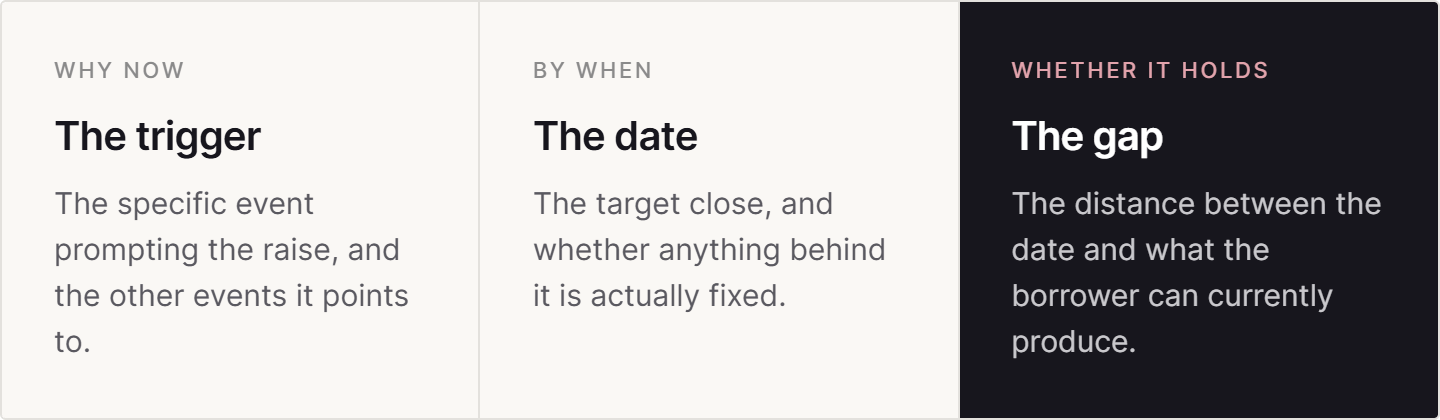
The trigger: what is prompting the raise
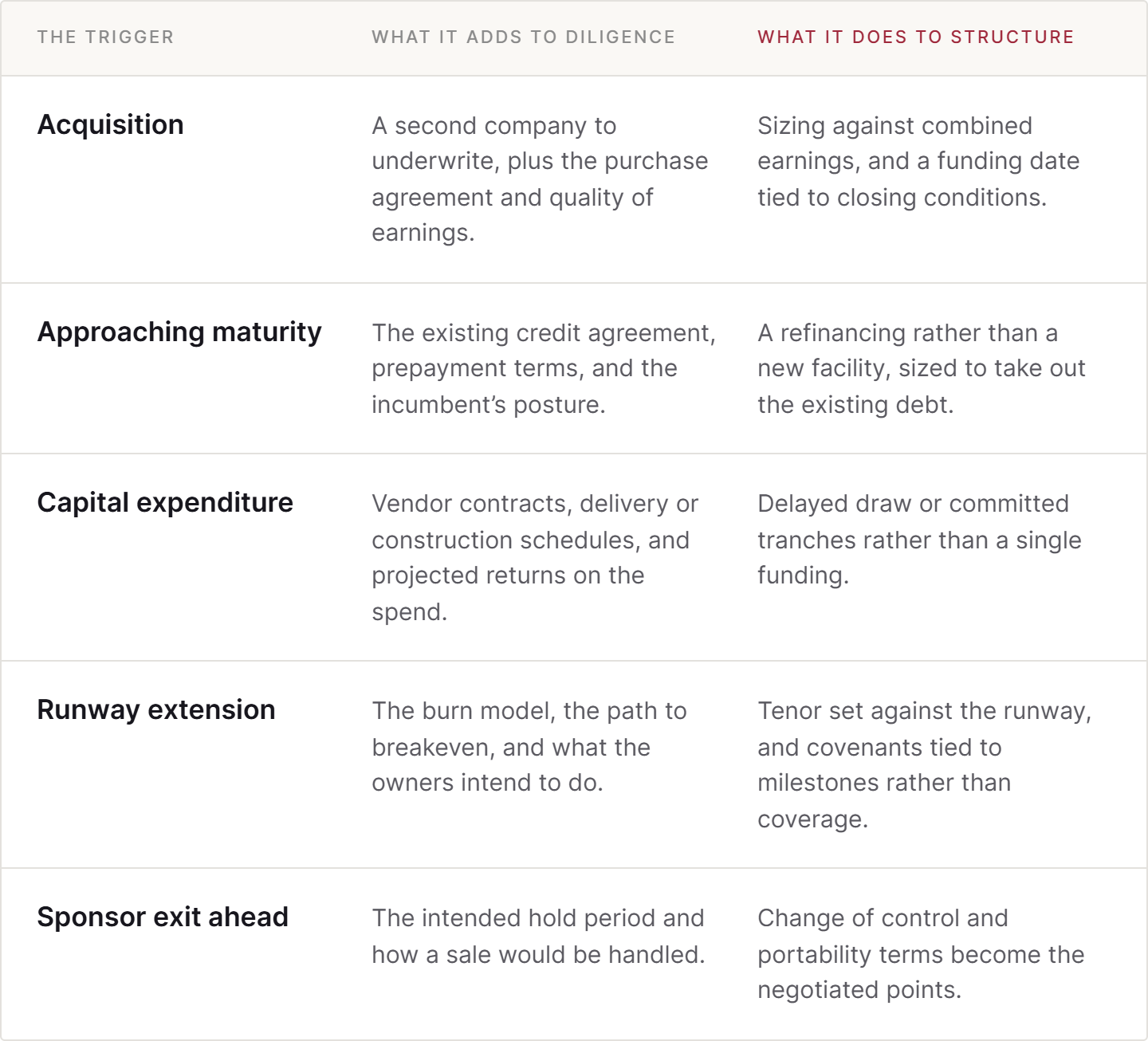
Most raises have one identifiable event behind them. An acquisition under letter of intent. A facility approaching maturity. A capital expenditure that has been deferred twice. A cash balance that will not support the current burn past a certain quarter. A sponsor preparing an exit in eighteen months who wants the structure settled first.
A lender wants the trigger named because it points to the events that will shape the deal. An acquisition means the diligence has to cover a target as well as the borrower, and the facility has to be sized for a combined business. An approaching maturity means the new facility is competing with a repayment already scheduled. A capital expenditure program means draw mechanics and a construction or delivery schedule. Each of those changes the structure being discussed, not just the timing.
A borrower who cannot name the trigger, or who names an amount and a use without one, is telling a lender the raise is exploratory. That is a legitimate position, and it is worth saying directly rather than leaving a lender to work it out. A credit team spends resources differently on a process that has a defined event behind it.
The date: what the timeline permits
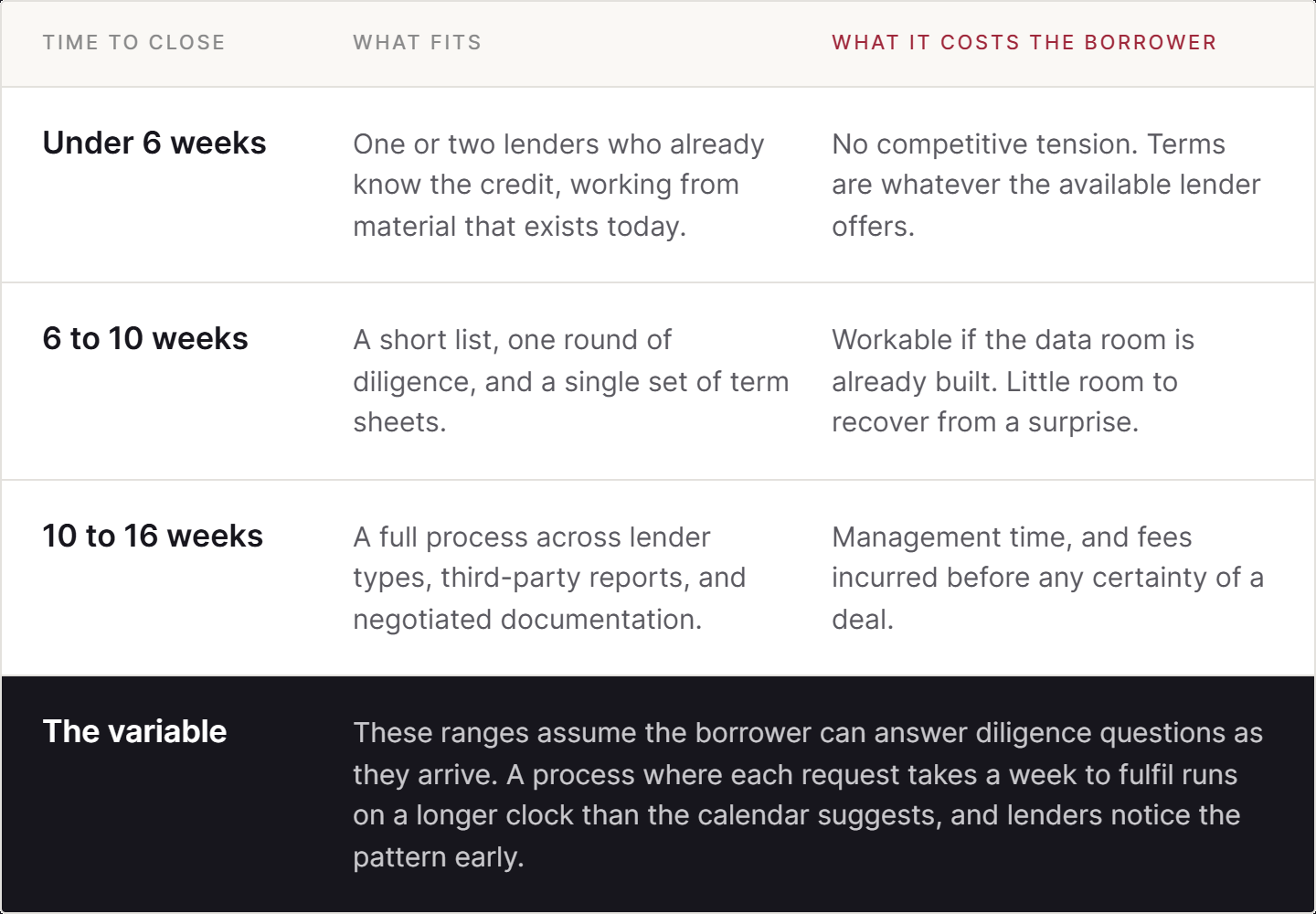
Borrowers routinely name a close date without knowing what a lender needs to fit inside it. Credit approval is a sequence of steps with fairly predictable durations, and the number of weeks available determines which steps can be completed rather than assumed.
A commercial bank running a full credit approval on a new relationship works on a different clock from a private credit fund with a single investment committee. A field exam for an asset-based facility takes weeks and cannot be compressed by asking. Third-party reports, appraisals and quality of earnings work have their own lead times. None of that is negotiable in the way pricing is.
The useful distinction is between a date that is fixed by something external and a date the borrower chose. A funding date in a purchase agreement is fixed. A maturity is fixed. A board meeting is usually movable. Lenders ask which kind they are working with, because a borrower defending a self-imposed date as though it were external tends to lose credibility on everything else they assert.
The gap between the date and the material
The third thing a lender reads is the distance between the stated timeline and what the borrower can actually produce. That distance is visible almost immediately, because the first diligence list is standard and the response rate to it is informative.
What a lender concludes from a slow response is usually not that the business is weak. It is that the process will take longer than the borrower said, which means the timeline in the first meeting was not a forecast. Once that has happened, the lender begins discounting other statements the borrower makes about their own readiness.
This is the one part of the situation layer a borrower can change entirely on their own, and well before going to market. A debt schedule that ties, three years of financials, a monthly model, contracts and customer concentration data, organizational documents. Assembling that material takes weeks and does not depend on anyone else’s decision.
When the date and the readiness disagree
The material question in this layer arrives when a borrower has a date they would like to hold and material that is not ready to support it. Two experienced advisors will give different answers.
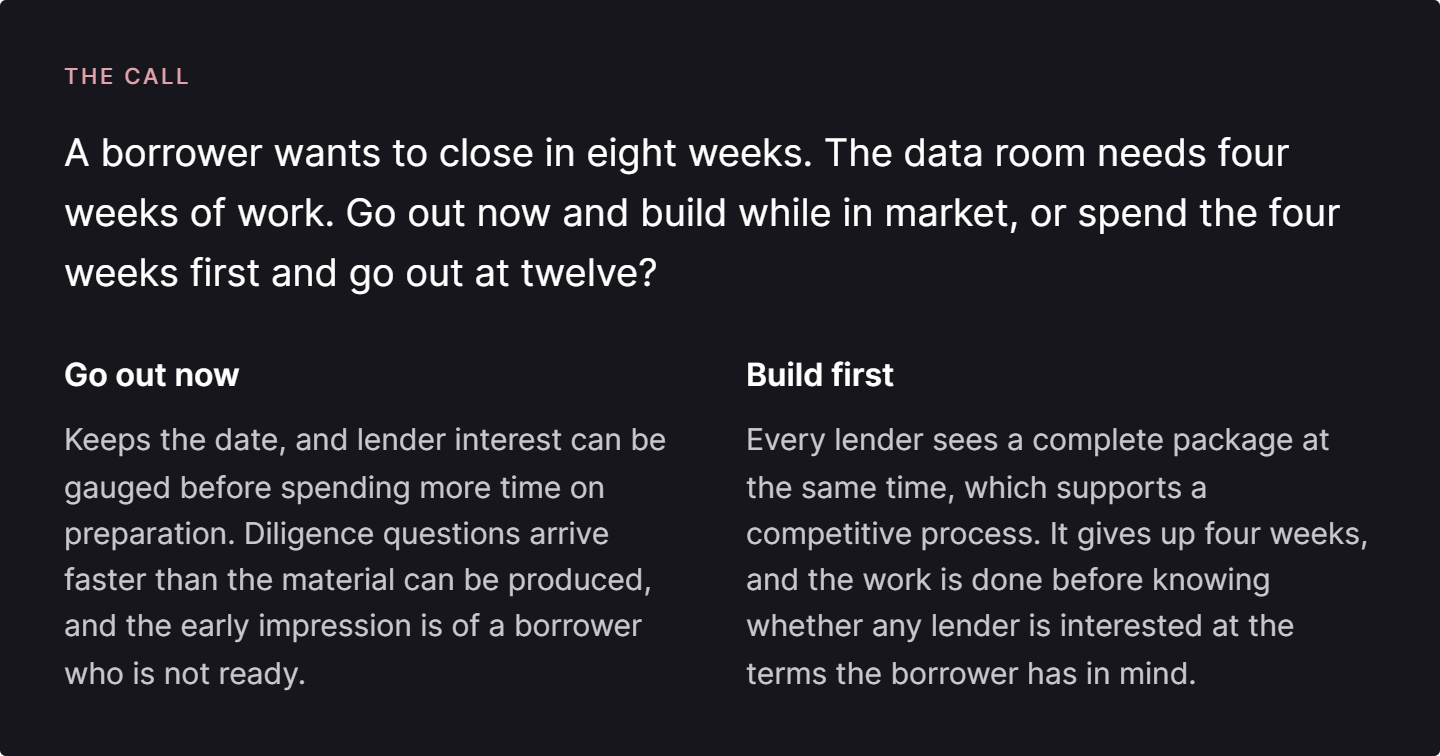
What decides it is how much of the gap is real work rather than assembly, whether the target lenders already know the credit, whether the date is externally fixed or chosen, and what the market is currently doing to processes that arrive unprepared. Those are facts about the market and about specific lenders, not about the borrower.
Use of proceeds, the shape of the ask, and the existing stack are all things a borrower can establish from their own records. The timeline is the first item in the situation layer that depends on how other parties behave. How long a specific lender takes, what they will accept as complete, and whether a compressed process costs pricing are questions answered by having watched those lenders work.
Next in the series
Ownership and support: who is behind the business
Who owns the equity, what they have done in past rounds, and whether any further support is committed or assumed. A lender treats documented support differently from stated intent.
Naming your trigger and assembling your material is work you can do. Knowing how long a specific lender will actually take, and what a compressed process costs in terms, is the part I do at Synthase Capital Partners.